
By guest blogger Catherine Lewis
This time of year in the garden is one of my favorites—a season of harvesting the last of the summer abundance, watching birds feast on the last sunflower heads, and preparing the beds for their winter rest. It’s also a natural moment for reflection: What went well? Where did students spend their time? What brought joy?
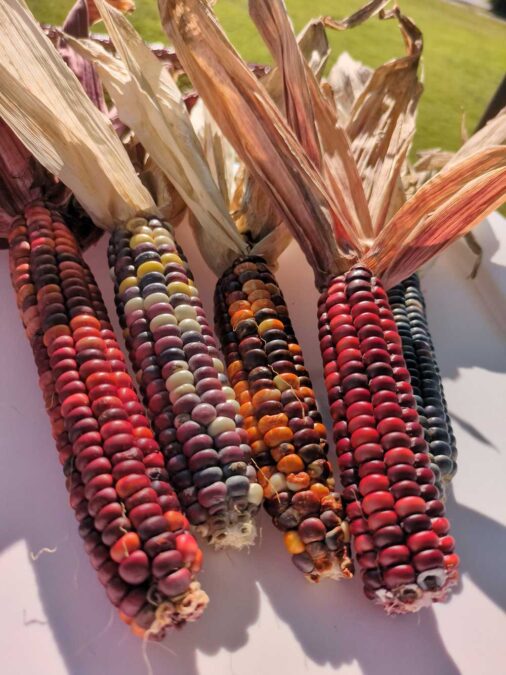
Last spring, I was lucky to be able to collaborate with an organization restoring Indigenous history through the planting of Milpas, or Three Sisters Gardens. I learned that this planting tradition is far richer than I had known—a practice more than 3,000 years old, gifted by the ancient Mayan cultures of Guatemala and Mexico.
The process of building the Milpa was very ceremonial. After broad forking and removing grass, we built what we decided to call “mounditos,” or little mounds. In this miniature little temple, we first planted our corn, followed by pole beans, and finally winter squash. After each planting, we took time to be still and listen to our surroundings, after which we gifted our baby seedlings some coffee grounds, and said some words of gratitude and blessing.
I’m inspired by the symbiosis of the Milpa, and it informs how I think about cultural inclusivity in the garden. Biologically, each plant benefits the others: corn gives support to the beans, beans feed the soil, squash shades the ground to hold moisture and prevent weeds. There are deeper relationships symbolized here beyond biology. Social anthropologist Silvia Terán says, “The milpa is the heart of the Mayan culture. It’s a link between nature, agricultural system, and culture—within the milpa, the three elements are in harmony.
These three elements working together give us a helpful framework for reflection as garden educators.
Nature: How can I care for our environment and use resources more sustainably?
Agriculture: How can I grow a more productive harvest and preserve abundance to prevent waste?
Culture: Who comes to this garden, and do they see themselves represented here? What plants can help students connect with their heritage? Who can teach me new ways to prepare the food we grow?
I am responsible for caring for the garden at Wright Middle school in South Nashville. This school is a beautifully diverse community representing over 30 different countries. When I think about creating a culturally inclusive garden, I find it more helpful to ask: What kind of culture do I want to cultivate here? I hope visitors feel a sense of belonging. I want students to know they each have an important role in tending and shaping this space—and to notice the abundance it offers: the food, the flowers, the creatures, and the wonder.
In Braiding Sweetgrass, Robin Wall Kimmerer says: “Perhaps we should consider this a four sisters garden, for the planter is also an essential partner … We too are part of the reciprocity.”
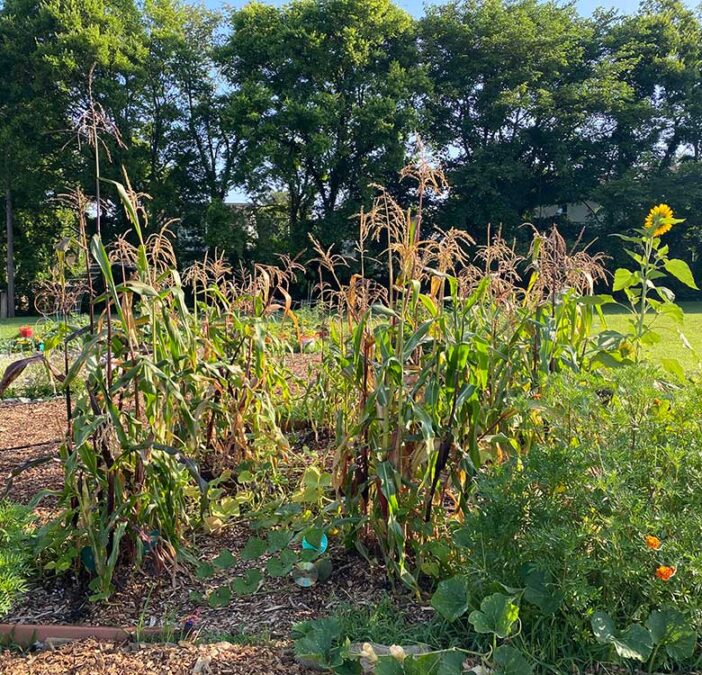
As gardeners, we can easily plant some corn, beans and squash and call it our culture corner in the garden. But the tradition of the Milpa invites us into relationships. Kimmer continues and summarizes this sentiment beautifully, “The gifts of each are more fully expressed when they are nurtured together than alone. In ripe ears and swelling fruit, they counsel us that all gifts are multiplied in relationship. This is how the world keeps going.”
Catherine Lewis is the PLG Garden Coordinator, budding CPF Certified 2026 Gardeneer, as well as the Community Cultivator at Wright Middle School for Cosecha Community Development in Nashville, Tennessee. The school’s garden was funded by Cox Enterprises.
PLG support has a variety of resources, including Three Sisters Garden guidance that can be found on the PLG page called “Help a Sister Out.” See more in the Seasons of the Regions section of the PLG November 2025 Newsletter. If you haven’t subscribed to our Newsletter sign up today.
Resource: United Nations Development Project – Climate and Forests: The Heritage of the Milpa.