
February 14th is the St. Valentine’s celebration of love; for ourselves, for each other, and for soulmates.
On Tuesday, February 17th we can turn our hearts to the Earth, celebrating the transition from the dormancy of winter to spring planting on the day of the Lunar New Year. Think of it as a winter wonderland Earth Day!
At PLG, we are readying to fund and onboard dozens of new PLG gardens in the coming weeks, from Northern California to Vermont with six stops in between. Of course we are also ready to support over 700 beloved PLG gardens of varying ages for the upcoming new planting season.
This blog (as well as the monthly Seasons of the Regions column in the PLG newsletter) serves to share ideas for indoor preparations as soil slowly warms across the country in March, April, and May. While every year is different, each region has a speculated last frost date, which will determine when those indoor sprouts become starter plants to then be planted in the ground.
Start planning now for a garden ripple effect:
- Start Seeds Indoors: A touch of warmth and light indoors
Use this guide to turn a classroom, a kitchen, or any room in the house into a greenhouse where seeds will excite any inquisitive mind, watching the tiny beginnings of your garden as a community endeavor, one seed at a time. - Plant Seedlings Outdoors: Transplant seedlings or starter plants from that nursery space
They call it a “nursery” because your seeds have been nurtured into the incubation of sprouting. Use this guide, as well as the Regions of the Seasons column, for the date range of planting in your neck of the woods, as soon as the soil in your area is warm enough. - Start Seeds Outdoors: Square food garden video | Garden warm up activities
Research your zone to see what seeds might be hearty enough to plant directly into your garden. Use the video above to learn about square foot gardening. Warm up your students as the ground warms up with the activities link above. - Last Date to Plant: Research the final date to plant in your zone, so crops have time to mature before your school year ends, or plan for summer break community harvest.
- Moon Phase Planting: Consider an age-old gardening tradition of planting based on lunar phases—no PJs needed.
Planting by the moon phase is the practice of planting above-ground flowers and plants between the new moon and the full moon. Inversely, this method encourages one to plant below-ground plants between the full moon and the new moon. Moisture levels in the soil are affected by the moon phases, just as the ocean tides are affected by the moon’s gravitational pull.
Both Native American tribes and the Founding Fathers of the United States followed the lunar calendar for planting. The lunar calendar, published by Benjamin Franklin, the father of today’s The Old Farmer’s Almanac, contributed to the success of colonial farmers. Modern farmers interested in sustainable gardening still utilize the moon cycle when planting.
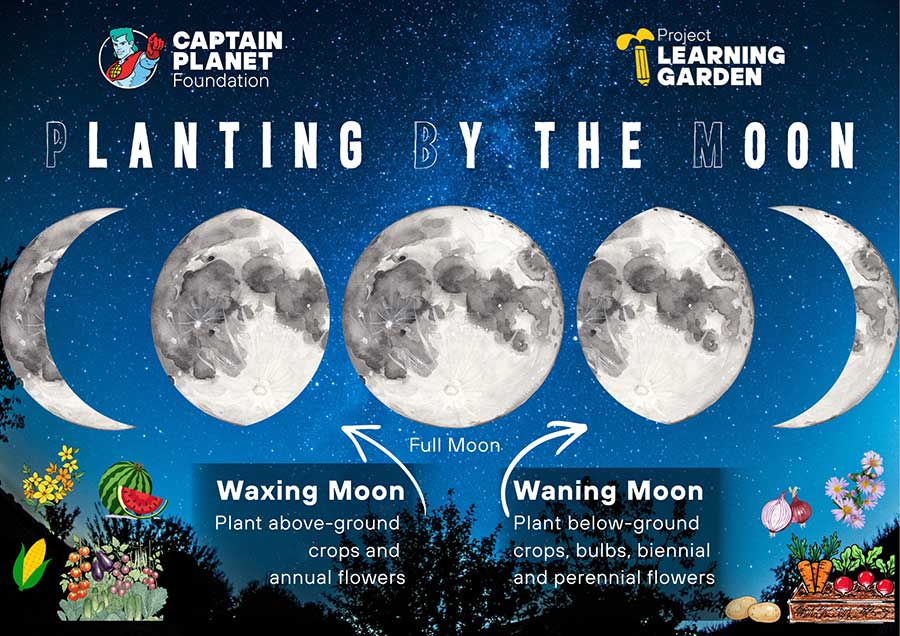
Waxing Moon • Plant above-ground crops and annual flowers
Waning Moon • Plant below-ground crops, bulbs, biennial and perennial flowers
For more information about planting, insert your zip code in the Farmers Almanac Planting Calendar. Share any celebrations, planting, garden activities and more with us at learninggarden@captainplanetfdn.org. Enjoy!