
Summer brings many great things to look forward to, such as sunny days, pool weather, picnics, and, most importantly, summer break!
With the 2025-2026 school year coming to an end, it’s important to think about how to protect your garden during the hot (and sometimes dry!) summer months. Making a plan to manage your garden means that when fall comes back around, you can pick right back up where you left off. Here are a few best practice strategies for making sure your garden can flourish, even when you’re away.
First, consider assigning beds to local families or food pantries while your school is on summer break. Honestly, this is our most recommended strategy for school gardens because:
- It keeps the beds weeded & watered while making sure that all that wonderful produce (planted by your students in the spring) gets eaten and enjoyed
- It builds ties between the school and the community
- Most plants will still be thriving and producing when your students return to school! What better way to return than with a salsa contest?!
Who can help with garden maintenance over the summer?
- Garden Bed “Adoption”: “Adopting out” garden beds to families or neighbors who can care for them over the summer. They can grow food for their own households while maintaining the bed for the summer.
- Summer School Club: Does your school host summer school? If so, this is a great project for students to still enjoy summer fun.
- A school-based volunteer network: Staff, students, and families from your school community may be willing to take turns watering, weeding, and harvesting from the garden.
- Youth workforce organizations: Local organizations that facilitate youth workforce opportunities that your school can hire to maintain the gardens.
- Local youth summer programs: Neighborhood summer camps, summer school classes, high school service learning projects, or other youth programs can help with basic garden maintenance.
- Garden clubs and student leaders? If your school has a garden club, summer could be a great opportunity for students to stay engaged by “adopting” a bed and helping care for it.
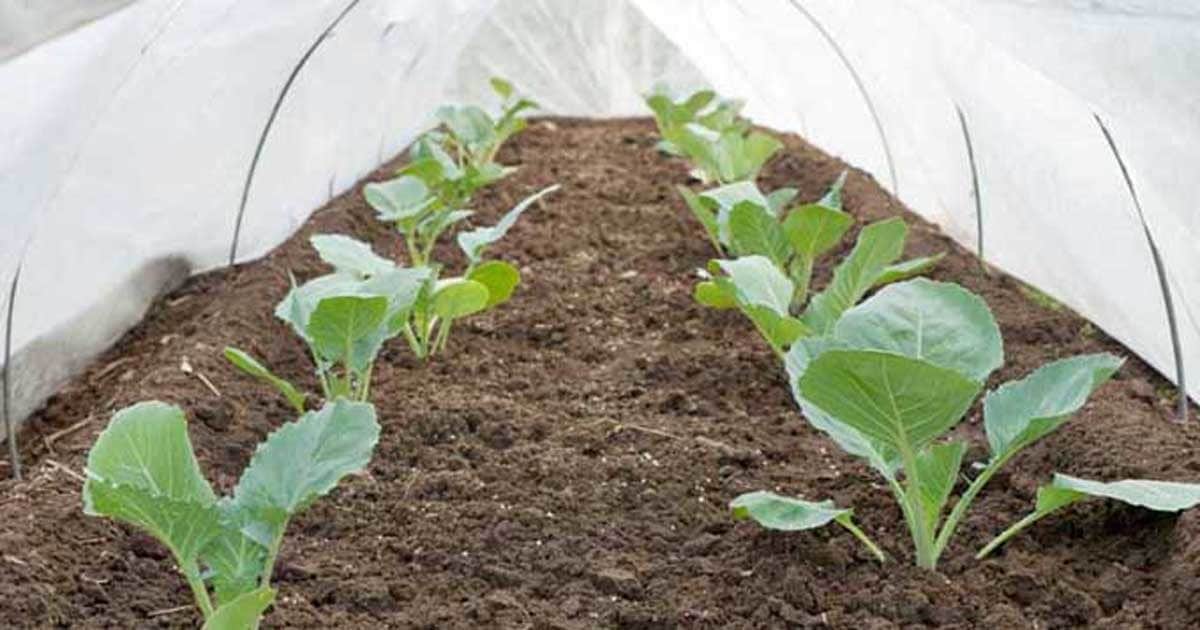
The other main strategy is mulching and cover cropping:
- Choose plants that can self-manage during the summer: Consider planting a couple of your beds with sweet potatoes, potatoes, pumpkin, melons, and other vining vegetables. These generally require less maintenance, need only to be watered [heavily] once or twice a week, and are ready for fall harvesting when students return!
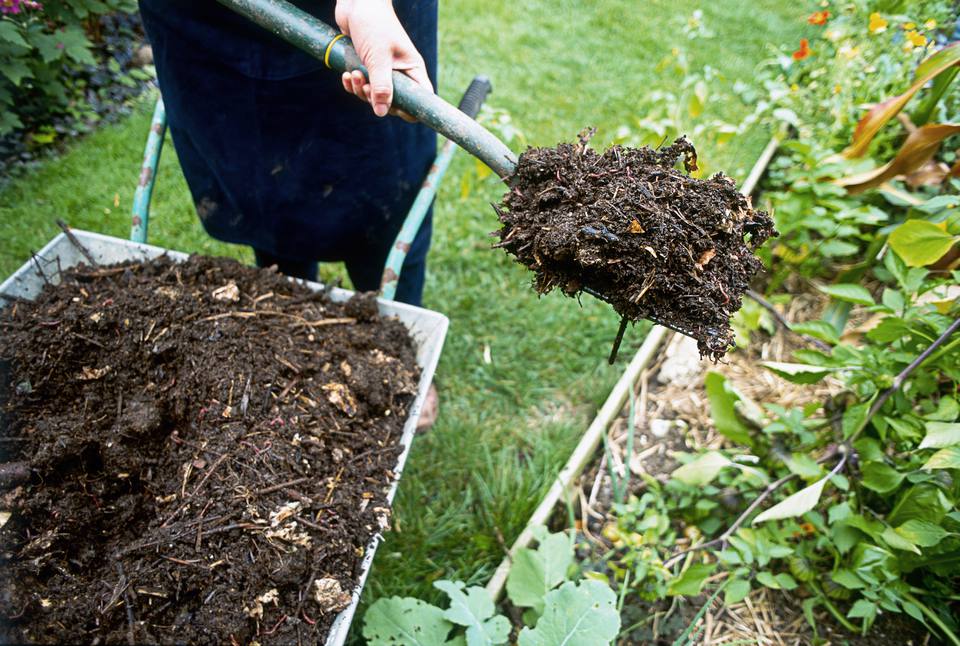
- Mulching: Mulching heavily [with straw*] around planted areas is key to maintaining soil moisture and feeding your plants all summer long. The key is to keep the straw about 2-4 inches away from the plant’s main stem so it doesn’t cause fungus or mildew to develop.
For any unplanted beds, you can put down a heavy mulch to protect your garden’s soil health by preventing weed growth and retaining moisture.
* The straw goes a surprisingly long way because it is packed so tightly. For the five garden beds that come with PLG, you should only need 2 bales, which will cost about $10-$15, depending on where you source them. - Cover Crops: Planting your beds with cover crops that fix nitrogen can help replenish the soil. At the end of the summer, these cover crops can be turned back into the soil to give your garden an extra boost.
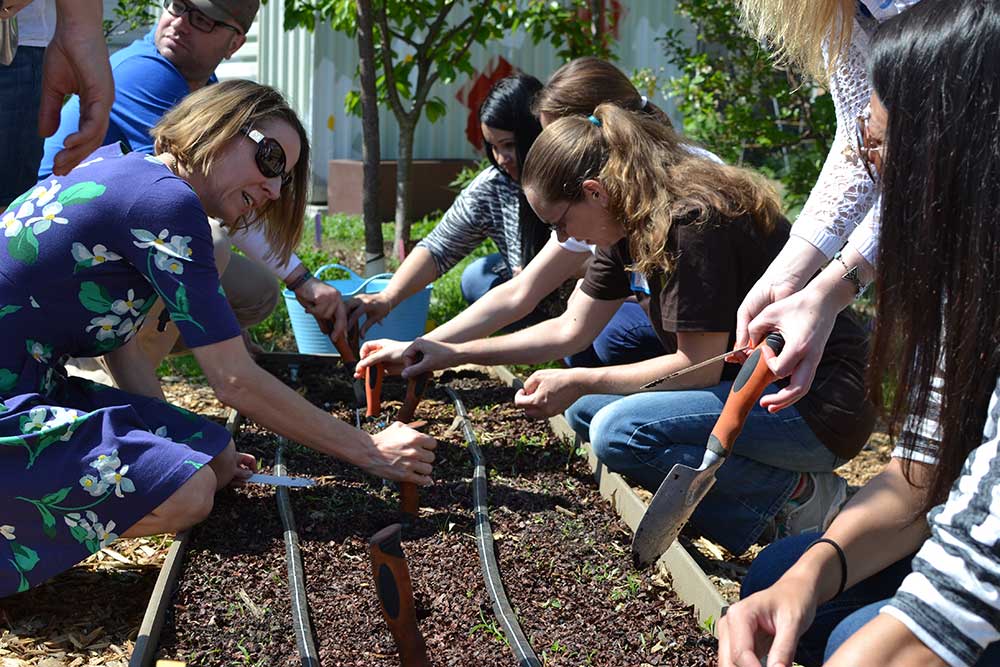
Let’s hear directly from PLG educators about how they maintain their school gardens during summer break…
“The summer maintenance of our vegetable garden is done daily by our custodians, who also help to harvest any produce and distribute it to our community. Our summer office staff and administration water the pollinator garden. We have cafe tables and chairs set up out there, along with a solar fountain. They find it a peaceful place to relax and unwind. Weeding is done by rotating staff members and custodians.” – Janice, Mullen Elementary
“Over the summer, we have a team to make sure our garden gets what it needs. Our custodian and counselor work together to make sure it is watered daily.” – Angela, Maldonado Elementary
“Automated irrigation is key for us, but it’s not enough. We have a schedule of volunteers who check on the watering systems throughout the summer, making sure the lines are all in place, timers are working correctly, and the water hasn’t been accidentally turned off.” – Stacie, Santiago STEAM Magnet Elementary
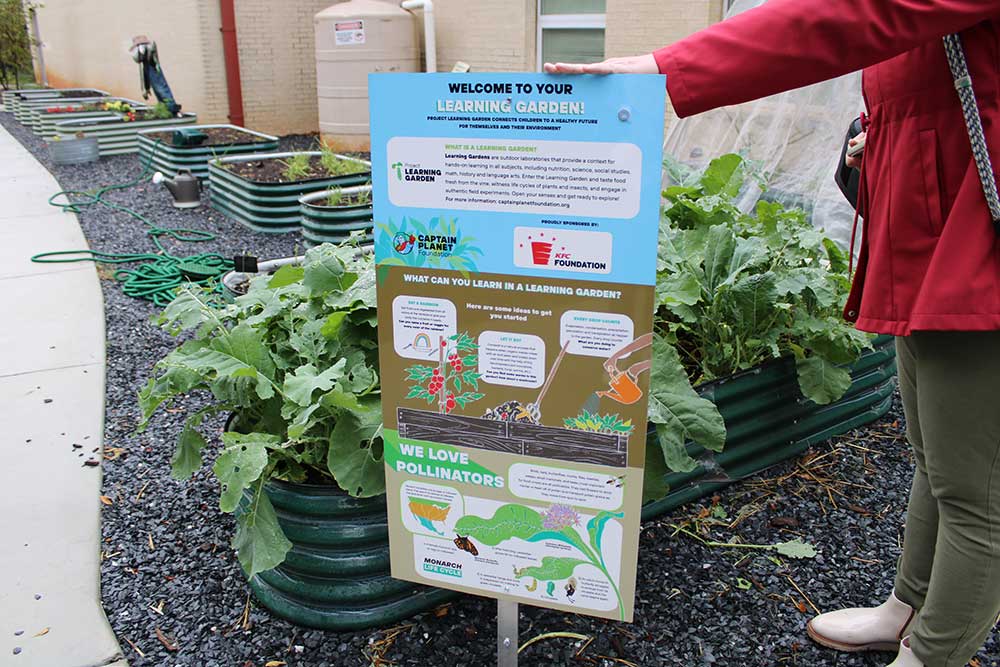
One thing that’s certain, keeping your garden healthy over the summer takes planning! And don’t forget to plan what your students will plant upon their return to school – this will guarantee a fall harvest before cold weather starts!